
New Alamein is often associated with Mediterranean beaches, modern waterfront developments and summer entertainment, but the wider El Alamein area has a much older story. A short trip away from the contemporary coastal attractions takes visitors to a place connected with one of the most significant campaigns of the Second World War: the El Alamein War Museum.
The museum was created to preserve the history of the 1942 Battle of El Alamein and the forces that took part in it. Today, visitors can see military vehicles, weapons, maps, models and personal belongings connected with the campaign, alongside displays explaining how the battles unfolded. The official Egyptian Ministry of Defence describes the museum as having an open-air display area, permanent exhibition halls and a temporary exhibition space.
For travellers staying in New Alamein, the museum provides an opportunity to see another side of the destination beyond the beach. This article covers its history, what to see, visiting information, transportation, nearby memorials and practical tips for planning a visit in 2026 and beyond.
The El Alamein War Museum was established on 16 December 1965 to commemorate the role of Egypt in the Battle of El Alamein. It was subsequently developed and renovated, reopening on 21 October 1992 for the 50th anniversary of the battle and undergoing further development before reopening its updated exhibition on 21 October 2014.
The museum’s purpose is to document the battles of El Alamein through physical objects and visual material. The official collection includes weapons, armoured vehicles, models, battle maps and personal belongings associated with military leaders and the participating forces.
This makes it particularly useful for visitors who want to understand the events beyond the dates and names commonly found in history books.
The museum is divided into different exhibition areas, so the experience includes both large outdoor equipment and more detailed indoor displays.
The outdoor section contains large military equipment associated with the Allied and Axis forces.
The Ministry of Defence identifies examples including:
Seeing this equipment at full scale can make the technological and logistical side of desert warfare easier to understand.
The permanent exhibition is organised into a main lobby and five halls:
The museum uses these spaces to present the roles and experiences of the forces involved in the conflict.
This country-by-country structure is particularly helpful if you do not already know much about the North African campaign. Instead of encountering an unrelated collection of military objects, you can gradually understand who participated and how the different forces were connected to the battle.
A visit to the museum can add a completely different dimension to a New Alamein holiday.
The modern city is built around contemporary leisure, accommodation, waterfront areas and entertainment. The historic El Alamein area, meanwhile, preserves evidence of events that took place more than 80 years ago.
That contrast makes the museum particularly suitable for travellers who want to combine:
It also means you do not need to dedicate your entire holiday to historical sightseeing. The museum can be planned as a half-day excursion within a wider New Alamein stay.
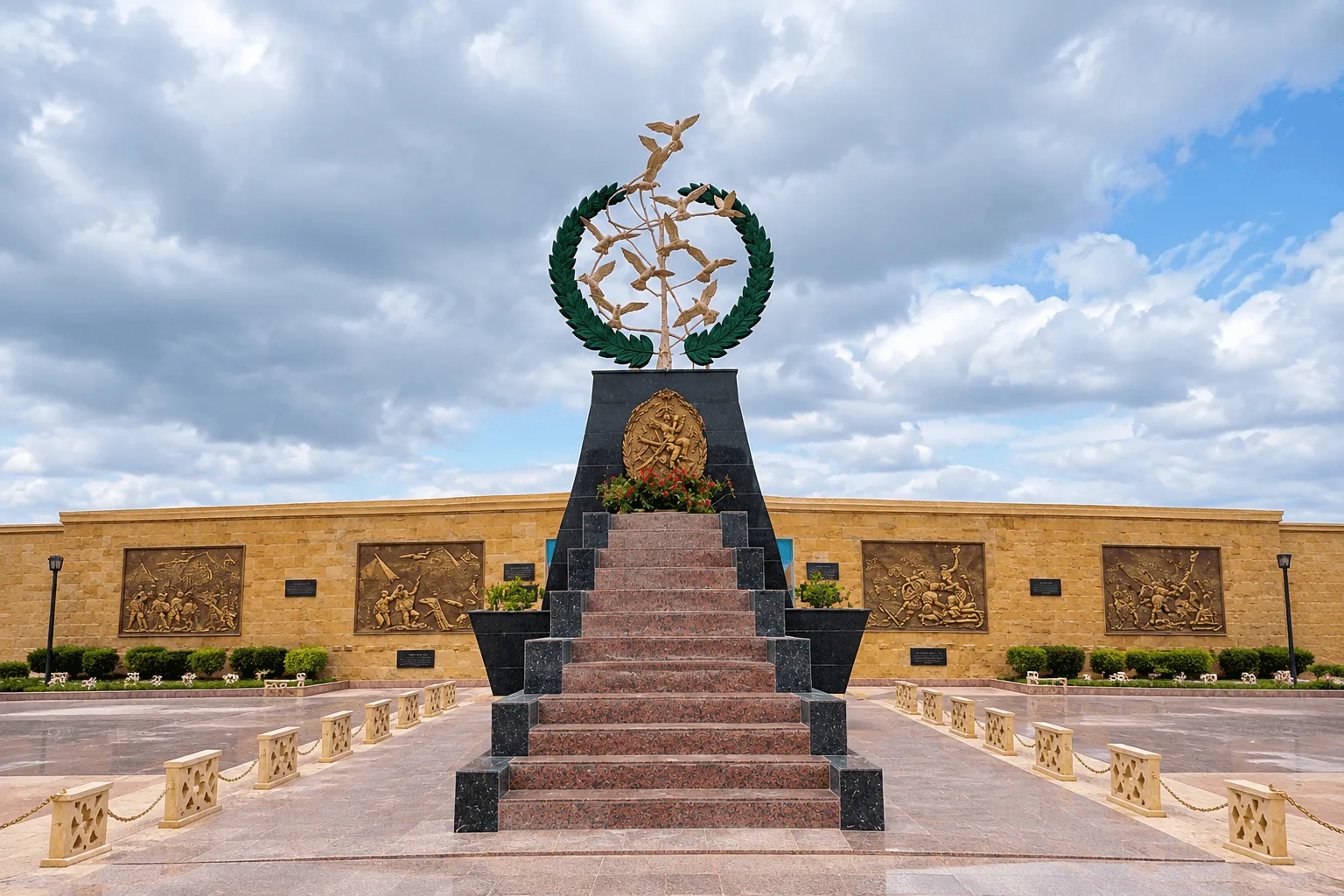
south of the coastal road. The official Ministry of Defence listing gives the museum’s contact number as 046-4100031.
As of 2026, the official listing states that the museum is open every day from 9:00 AM to 4:00 PM.
Because museum schedules and visitor arrangements can change, it is sensible to verify the official information shortly before travelling, particularly during public holidays or special commemorative events.
The Ministry of Defence has also announced occasional free-entry days for military museums. For example, the El Alamein Military Museum was included in a free public access initiative from 24–26 April 2026 for the anniversary of Sinai Liberation. Such announcements are event-specific and should not be treated as the regular admission policy.
Transportation is an important part of planning the visit because the museum is outside the main modern leisure areas of New Alamein.
For visitors staying in New Alamein, a private car, taxi or pre-arranged transfer is the most straightforward option for reaching the museum.
The museum is located along the Alexandria–Matrouh road, so road transport also makes it easier to combine the visit with other historical sites in the area.
No. New Alamein does not have a conventional metro system, so the museum should not be planned around metro access.
Road transport remains the practical choice for reaching the museum from accommodation and for moving between the different historical sites.
Rail connections to the El Alamein area are available, while Egypt is also developing its first high-speed electric railway network connecting Ain Sokhna, Alamein and Marsa Matrouh.
In September 2026, government authorities reported that preparations and trial operations were progressing on the 660-kilometre high-speed line, including the Alamein section.
However, a railway station is not the same as direct museum access. If you arrive by train, you will still need onward road transportation to reach the museum and surrounding memorials.
For a sightseeing day focused specifically on the museum and cemeteries, arranging road transport in advance is therefore more convenient.
Yes. Combining the museum with the nearby war cemeteries is one of the most practical ways to understand El Alamein’s wartime history.
The wider area includes memorial sites associated with Commonwealth, German and Italian forces. Egypt’s official tourism information identifies the museum alongside the Al-Alamein War Cemetery, Italian War Memorial and German War Memorial as important historical sites in the area.
A useful order is:
Morning: El Alamein War Museum
Late morning: Commonwealth War Cemetery
Afternoon: German or Italian memorial, depending on your route and opening arrangements
Later: Return to New Alamein
Allow enough time for transportation between sites rather than trying to fit every location into a tightly timed itinerary.
The cemeteries are different from the museum and should be approached as memorial spaces rather than conventional sightseeing attractions.
The Commonwealth cemetery commemorates personnel who died during the North African campaign. The German and Italian memorials provide further reminders of the multinational nature of the fighting.
Visitors should keep noise low, follow photography rules where applicable and avoid climbing on monuments or military displays.
The museum explains the conflict through objects and exhibits; the cemeteries provide a quieter way of understanding the human cost of that conflict.
The amount of time you need depends on whether you are visiting only the museum or creating a wider historical itinerary.
For the museum itself, allow enough time to explore both the indoor halls and open-air display rather than rushing through the collection.
If you are also visiting the Commonwealth, German and Italian memorials, the outing will naturally take longer because the sites are separate.
For most holidaymakers, a half-day historical outing is a practical way to fit the museum into a wider New Alamein itinerary.
History enthusiasts may prefer to dedicate most of a day to the area.
The museum is open throughout the week according to its current official listing, so the best time largely depends on your wider itinerary and the weather.
July and August are among the busiest months on Egypt’s North Coast. If your visit falls during the summer season, an early start can make the outdoor portion of the museum visit more comfortable.
The 9:00 AM opening time makes a morning visit practical.
The cooler season can be particularly comfortable for travellers planning to combine the museum with outdoor memorials and other historical locations.
October has particular historical relevance because the Second Battle of El Alamein began on 23 October 1942. Visitors interested in the historical context may find this period especially meaningful, although any special commemorative activities should be confirmed separately.
The museum can work well as a family educational activity, especially for older children and teenagers interested in history, aircraft, tanks or military technology.
The museum’s official information also states that it provides educational activities for students of different age groups, students with special needs and academic researchers.
For younger children, parents can make the visit easier by explaining the basic story of the Battle of El Alamein beforehand. A short explanation of who the Allied and Axis forces were and why North Africa was strategically important can make the displays much easier to understand.
A few simple preparations can make the experience more comfortable.
Take time to read the maps and explanatory displays. They provide important context for the vehicles and weapons displayed around the museum.
If you are travelling with children, use the exhibits to explain how geography, transport and technology affected the battle rather than focusing only on the weapons.
Most importantly, remember that the surrounding cemeteries and memorials are places of remembrance.
If the museum is one part of a wider New Alamein holiday, choosing accommodation based on your complete itinerary can make transportation easier.
Travellers comparing resorts in El Alamein can consider factors such as location, access to main roads, room configuration, dining facilities and how easily they can reach the attractions they want to visit.
For visitors who want to combine historical sightseeing with a longer coastal break, Gewan Palace New Alamein can serve as the accommodation base for exploring the area while keeping the museum visit as one part of the overall itinerary.
Those looking specifically for luxury stays in New Alamein may also prefer to plan their sightseeing around the location and facilities of their accommodation rather than choosing a stay based only on beach access.
You do not need a complicated schedule to experience the historical side of El Alamein.
Leave your accommodation early and travel to the museum. Start with the permanent exhibition halls before exploring the open-air military displays.
Continue to the Commonwealth War Cemetery or another nearby memorial site.
Return towards New Alamein for lunch and some downtime. If you have energy, you can continue with your planned coastal activities.
Keep the evening flexible. Depending on the season, you can spend time around the waterfront, dine locally or return to your accommodation for a quieter evening.
This format keeps the historical part of the trip focused without turning the entire holiday into a sightseeing schedule.
It documents the Battle of El Alamein and the forces that participated in the 1942 campaign. Its collections include military vehicles, weapons, maps, models and personal belongings.
The museum was established on 16 December 1965. It was later renovated and developed, with a major reopening taking place on 21 October 2014.
The current official Ministry of Defence listing states that the museum is open daily from 9:00 AM to 4:00 PM.
It is located at the 105-kilometre marker on the Alexandria–Matrouh road, south of the coastal road.
No. There is no conventional metro connection to the museum. Road transport is the practical option for visitors travelling from New Alamein.
Yes. The museum provides educational activities for students of different ages and also has programmes involving students with special needs and academic researchers.
October has particular historical importance because the Second Battle of El Alamein began on 23 October 1942. Visitors travelling around this period can explore the museum with that historical context in mind.
The El Alamein War Museum offers something different from the modern attractions of New Alamein. Its displays provide a closer look at the 1942 battles through military equipment, maps, models, personal belongings and exhibitions dedicated to the forces that participated in the North African campaign.
For travellers, the museum works particularly well as part of a wider historical outing. You can combine it with the Commonwealth, German and Italian memorial sites, then return to New Alamein for the rest of your coastal holiday.
In 2026, the museum’s official opening hours are listed as 9:00 AM to 4:00 PM daily, while transportation infrastructure around New Alamein continues to develop, including the new high-speed rail connection.
If you are planning a stay in the area, allow enough time for road travel and avoid treating the museum as a quick photo stop. Understanding its history first can make the wider El Alamein landscape much more meaningful, while leaving plenty of time to experience the modern side of New Alamein afterwards.
BEST RATES GUARANTEED